Japan golf industry change: Why manufacturing share is 18.8
"The landscape of leisure and economic activity often shifts alongside broader national trends, reflecting deeper changes in how a society spends its time and capital."
The Japan golf industry change is characterized by a complex interaction between shifting consumer behavior and the nation's broader economic trajectory. This evolution affects both the service sector and the manufacturing base, influencing how leisure is integrated into the modern lifestyle.
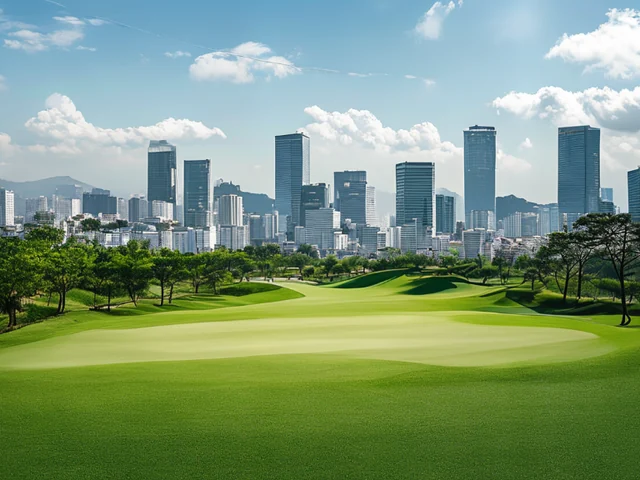
Key takeaways include the role of manufacturing in the national economy, the impact of real GDP fluctuations on discretionary spending, and the structural shifts within the leisure market.
How does the Japan golf industry change affect the economy?
At dawn in Chiba, a golfer swings a heavy driver through the humid air to witness how the Japan golf industry change ripples outward.
A golfer swings a driver on a lush green fairway in Chiba, feeling the humid morning air. This individual act of leisure is part of a massive sector that interacts with Japan's broader economic indicators.
Understanding the Japan golf industry change requires looking at the macroeconomic environment that supports such spending.
The capacity for leisure spending is tied to national productivity and growth. According to World Bank data, Japan recorded GDP growth of 1.2% in 2025. This level of growth influences the disposable income available for premium sports and club memberships.
Furthermore, the manufacturing side of the sport, including high-end equipment, is linked to the country's industrial output. According to World Bank data, Japan recorded manufacturing share of GDP of 18.8% in 2024.

This industrial strength provides the foundation for the high-quality tools used on the course.
What role does the Japanese golf sector shift play in GDP?
Walking through a quiet clubhouse in Tokyo, one observes the quiet efficiency of service staff. This sector shift is not an isolated phenomenon but a component of the larger economic engine. The stability of the leisure market often mirrors the stability of the national economy.
The growth of specialized service sectors can be influenced by real GDP trends. According to the International Monetary Fund (IMF), Japan recorded real GDP growth of 0.7% in 2026. Even modest growth rates can dictate whether luxury golf services expand or consolidate.
When the economy moves, the golf sector moves with it, adjusting its pricing and service models to match the consumer's financial reality.
According to World Bank, the 2025 record includes 1.2%.
How is the golf industry social impact evolving?
A group of retirees gathers at a driving range in Osaka, their laughter echoing against the metal fences. This social impact is visible in the changing demographics of the sport. As the population ages, the way golf is played and perceived in society undergoes a significant transformation.

The golf industry social impact involves a transition from traditional, rigid etiquette to more flexible, technology-driven experiences. This change reflects a broader cultural evolution where time is valued differently across generations.
While older players maintain the classic traditions, younger participants often seek efficiency and digital integration. This demographic shift alters the social fabric of the sport, making it more accessible yet distinctly different from its historical roots.
What drives the Golf market evolution Japan?
A technician adjusts a high-precision sensor on a new simulator in a downtown urban center. This represents the technological side of the market evolution. The integration of advanced tools is changing how players train and compete.
The Golf market evolution Japan is fueled by the marriage of traditional sport and modern innovation. As consumers seek more data-driven results, the demand for precision equipment and simulation technology rises.

This trend is part of a larger pattern of consumer behavior in Japan, where quality and technological sophistication are highly valued. The evolution is not just about playing the game, but about mastering it through data.
How does consumer behavior in Japan influence the market?
A young professional checks a mobile app while waiting for a tee time at a suburban course. This reflects the changing ways people interact with leisure activities. Modern consumers demand seamless, digital-first experiences that fit into a fast-paced life.
The consumer behavior in Japan is shifting toward convenience and personalized services. This change drives the demand for booking platforms, digital scoring, and automated course management. As the market responds to these needs, the competitive environment within the industry intensifies.
Companies that fail to adapt to these digital expectations may find themselves sidelined by more agile, tech-savvy competitors.
What is the economic effect of golf growth?
A manager reviews quarterly reports in a bright office overlooking a golf resort. The economic effect of golf growth is measured in both direct revenue and indirect spending in hospitality and tourism.

The economic effect of golf growth can be seen in the revitalization of regional areas through golf tourism. As courses attract more visitors, local economies benefit from increased spending on accommodation, dining, and transportation.
This ripple effect demonstrates how a single sport can act as a catalyst for regional economic activity. However, the scale of this effect is inherently limited by the overall national economic growth rates and demographic shifts.
- How does the Japan golf industry change affect the economy?
- What role does the Japanese golf sector shift play in GDP?
- How is the golf industry social impact evolving?
The same subject is also called Japan golf trend analysis.
Comments 0