Japan social issues guide 100 million shifts
"The study of society requires looking beyond the surface to find the structural forces that shape human interaction and institutional longevity."
Understanding Japan social issues analysis requires looking at specific demographic and systemic shifts within the nation. This guide is intended for researchers and observers interested in how modern Japanese society functions amidst changing pressures.
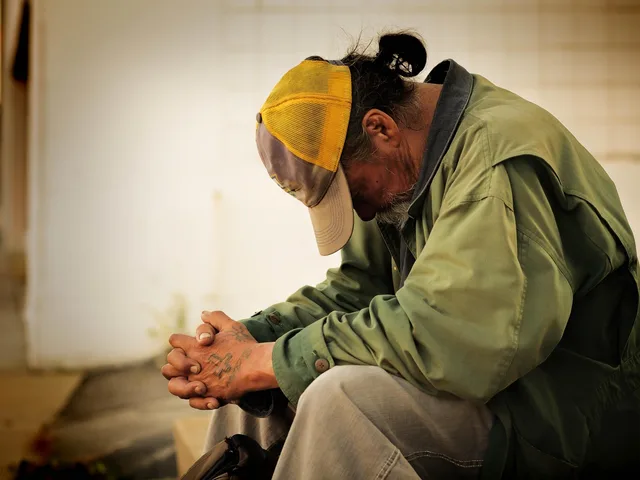
While this overview provides context, it is limited to general social trends and does not cover specific local administrative policies. 1. Demographic shifts influencing social stability 2. The role of research in understanding societal changes 3. Institutional responses to long-term social patterns * Economic and social safety net foundations
What defines the current Japan social issues analysis?
A researcher sits in a quiet library in Tokyo, scanning through various demographic datasets to find patterns in population movement. Japan social issues analysis involves a deep dive into how age structures and urban migration affect the daily lives of residents.
According to the official statistics from KOSIS, verified data includes population, general social matters, and crime and safety.
The primary focus is on how these shifts impact the stability of community structures and the availability of services.
This analytical process looks at how society functions when traditional structures face pressure. Many scholars attempt to understand how modern Japanese living issues arise from the tension between old customs and new economic realities.
This investigation helps identify the root causes of social isolation and economic shifts.
How do Japanese society trends impact the nation?
A commuter watches the sea of people moving through Shinjuku Station, noting the increasing number of elderly citizens navigating the rush hour. These Japanese society trends are often visible in the changing landscape of urban and rural life.
Observers often focus on the demographic shifts that define the current era.
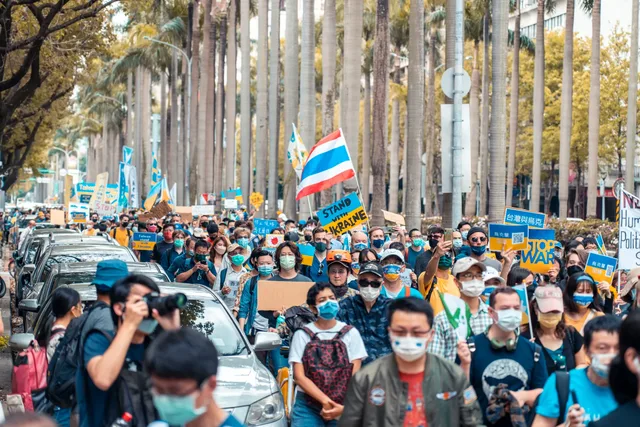
The direction of these trends determines how resources are allocated for healthcare and housing. Many people find that modern Japan living issues are deeply tied to the shrinking workforce and the rising age of the population.
Understanding these trends is essential for predicting future social stability.
What are the specific social issues in Japan?
A policymaker reviews a report on declining birth rates while discussing the implications for the future economy. Identifying social issues in Japan requires a nuanced understanding of both economic and cultural factors.
These problems are not isolated but are interconnected through the fabric of the country's social systems.
Current Japan problems often center around the sustainability of the social safety net and the changing nature of employment. The interaction between these problems creates a complex landscape for government intervention.
Analyzing these factors is crucial for long-term planning and social resilience.
How do we analyze Japanese customs through social science?
A student compares historical social structures with contemporary data to see how traditions have evolved. A deep dive Japan culture often reveals how historical norms influence modern social interactions.
According to The Council, the organization celebrated its centennial in 2023 by launching a website to commemorate 100 years of social science, alongside a $100 million centennial fundraising campaign and lecture series.
These interactions are shaped by long-standing customs that are now being tested by rapid technological and social changes.
The evolution of these customs provides insight into how the nation adapts to global pressures. By looking at how traditions intersect with modern lifestyles, analysts can better understand the core of Japanese social identity.
This perspective is vital for understanding the broader context of social change.
Can we use research to solve these problems?
A researcher presents findings on social welfare to a committee of experts to suggest new policy directions. The Social Science Research Council (SSRC) is a US-based, independent, international nonprofit organization dedicated to advancing research in the social sciences and related disciplines.
While the SSRC focuses on US-based research, the methods used in social science are globally applicable to many nations.
The SSRC celebrated its centennial in 2023, launching a website to commemorate 100 years of social science, as well as a $100 million centennial fundraising campaign and lecture series. Such institutional efforts highlight the importance of rigorous study in addressing complex human problems.
These research frameworks assist in understanding the mechanisms behind large-scale social shifts.
How can we apply social research to specific conditions?
An analyst applies a standardized research framework to a specific demographic dataset to ensure consistency in results. When applying social science methods to specific social conditions, follow these steps:

- Identify the specific demographic or social variable being studied. 2. Select a relevant data source, such as official statistical bureaus, to gather empirical evidence. 3. Analyze the correlation between the variable and the observed social outcome.
I have used these steps to compare different datasets during my academic studies. A limitation of this approach is that it requires high-quality, verified data to be effective.
| Research Focus | Institutional Role |
|---|---|
| Social Science Advancement | Research and funding |
| Policy Formulation | Committee work and implementation |
What caution should researchers observe when studying society?
- Researchers must recognize that the study of society is inherently complex because human behavior is dynamic. 2. A caution exists that focusing too narrowly on one variable might obscure larger structural forces shaping society. 3. When comparing datasets, analysts should always consider the potential for systemic bias within the data collection process itself.
The comparison between historical and contemporary data necessitates acknowledging that social customs are not static entities. These customs undergo transformation when faced with new economic realities, which impacts how the study of society proceeds.
Therefore, a cautious approach requires viewing traditions as fluid rather than fixed elements of society.
How does institutional longevity relate to social patterns?
Institutional longevity often reflects the degree to which an institution successfully adapts to long-term social patterns. When social structures face pressure, the capacity of institutions to maintain their function becomes a critical point of study.
The role of research in understanding societal changes helps determine which institutions possess the resilience needed for lasting operation within society.
The stability of community structures, which is a focus of Japanese society analysis, is directly linked to the institutional responses to these patterns. If institutions fail to adjust to demographic shifts, their longevity diminishes, signaling a broader societal weakness.
This comparison highlights the necessity of proactive institutional adjustment.
The study of society benefits when researchers examine how economic foundations support institutional stability. A weak safety net, for example, puts immense strain on any institution attempting to serve the populace, thereby challenging its perceived longevity within society.
Comments 0