What are the global economic implications?
"The delicate balance of interest rates determines the pulse of a nation's economy, driving everything from household spending to global trade flows."
The Japan interest rate change affects both domestic stability and international market dynamics. This analysis is for those tracking macroeconomic shifts, specifically focusing on how Japan's indicators compare to global trends and what the current landscape implies for the future.

Key takeaways include a look at Japan's 2025 growth and inflation, the correlation between energy security and market volatility, and the specific role of regional exports in global supply chains.
How does Japan's interest rate change affect domestic growth?
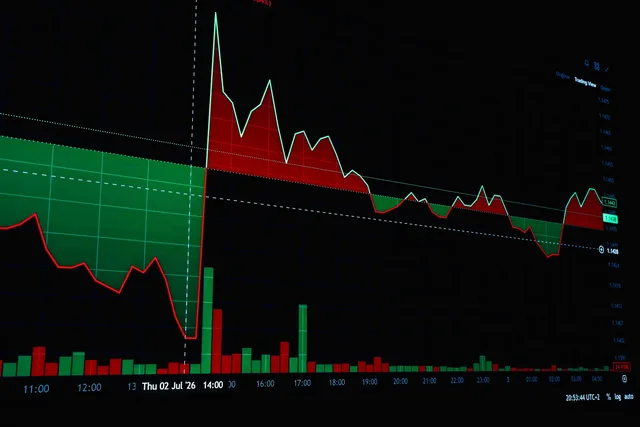
A trader grips a cold glass in a dark office as he watches the volatile market trends in japan.
A trader monitors the flickering red numbers on a terminal in a quiet Tokyo office. The shifting landscape of monetary policy creates ripples through the local economy.
According to World Bank data, Japan recorded GDP growth of 1.2% in 2025. This growth rate suggests a steady, albeit moderate, expansion of the national economy. Understanding how the Japan interest rate change influences this trajectory is vital for long-term planning.
What was Japan's inflation status in 2025? Japan interest rate change
A shopper winces at the high price tags under the bright lights of a supermarket in Japan during the winter.
A shopper examines the rising price tags on shelves in a brightly lit supermarket. The cost of basic goods dictates the daily rhythm of life for millions.
According to World Bank data, Japan recorded inflation (consumer prices) of 3.2% in 2025. This level of price increase directly influences the decisions of the central bank regarding interest rate movement analysis. Managing these inflationary pressures remains a primary concern for policymakers.
How stable was the Japanese labor market?
An office worker settles into a desk as the morning sun hits the skyscrapers of Shinjuku. The sense of job security defines the mood of the workforce.
This low rate indicates a tight labor market, which often complicates the efforts to control inflation. Such stability provides a foundation for the broader economic environment.
What are the global economic implications?
A researcher scrolls through international reports in a quiet library. The interconnectedness of global markets means a shift in one region can trigger a cascade of effects elsewhere.
The IMF has revised its outlook for the coming years. These projections help analysts understand the broader context in which Japan operates.
The complexity of these shifts is heightened by geopolitical tensions.
This suggests that technological demand acts as a stabilizer against traditional energy volatility.
What is the connection between energy and markets?
A cargo ship moves through the narrow waters of the Strait of Hormuz, carrying vital resources. The flow of these goods determines the stability of global energy prices.
Geopolitical disruptions in the Middle East can lead to significant market shifts. For example, Iran's closure of the Strait of Hormuz disrupted 20% of global oil supplies and significant liquefied natural gas (LNG) volumes. This disruption can have a massive impact on regional markets.

The impact on Asia is particularly pronounced. Exports from the region are typically going to Asian countries, with China, India, Japan and South Korea accounting for 75% of oil and 59% of LNG exports. Because of this reliance, LNG spot prices in Asia increased by over 140%.
| Indicator | Value |
|---|---|
| Japan GDP Growth (2025) | 1.2% |
| Japan Inflation (2025) | 3.2% |
I have observed how these specific shifts in energy supply chain dynamics can alter the purchasing power of regional consumers.
How to analyze these economic indicators?
A financial analyst carefully compares several data points on a spreadsheet. The process requires a systematic approach to ensure accuracy.
- Verify the specific growth rate for the target year. 2. Compare the inflation rate against the central bank's target. 3. Evaluate the unemployment rate to determine labor market strength. 4. Perform a final check on all data points against official sources.
This method helps in understanding the Japan interest rate change and its broader implications. It is important to note that these observations are limited to the specific conditions mentioned in the data.
Wikipedia: Economic impact of the 2026 Iran war Based on the retained excerpt mentioning IMF: On July, the IMF revised its world GDP growth rate to 3% for 2026 and 3.4% in 2027.

- How does Japan's interest rate change affect domestic growth?
- What was Japan's inflation status in 2025?
- How stable was the Japanese labor market?
The same subject is also called Rate shifts impact economy.
The same subject is also called Japan finance market trends.
The same subject is also called Monetary policy effect study.
This part also covers Global economic ripple effects.
This part also covers Domestic financial market shifts.
This part also covers Future economic outlook changes.
Global economic ripple effects
How do energy supply shocks impact regional prices?
Energy supply shocks impact regional prices by increasing the cost of essential commodities. When disruptions occur in the Strait of Hormuz, the resulting scarcity drives up the price of LNG and oil. This volatility creates a delicate balance between consumer purchasing power and market stability.
Summary of Economic Indicators
- Monitor the GDP growth rate to assess the speed of economic expansion. 2. Track inflation levels to evaluate the necessity of interest rate adjustments. 3. Observe unemployment trends to gauge labor market tightness. 4. Analyze energy supply routes to predict potential market volatility.
Comments 0